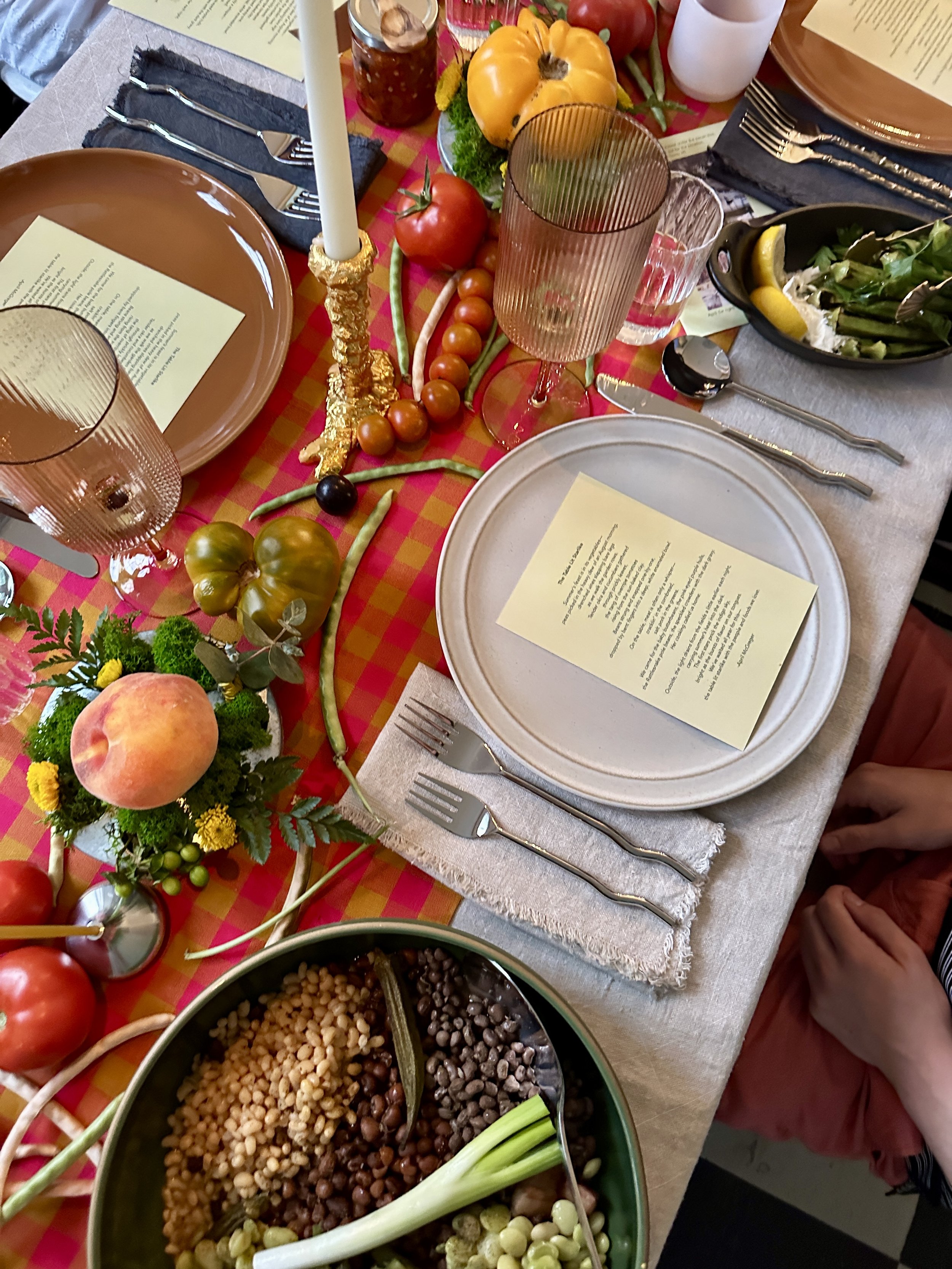
Kira Corbin spent years as a prop and interior stylist, creating sets that people wanted to live in—and so in 2025, she launched Standard Affair, a ceramics and tableware company that allows them to do just that. She designs each piece and has them produced in Portugal, as a way of honoring the country’s legacy of craftsmanship and her Portuguese heritage. After spending years living in New York, she’s now based in Portland, Oregon, collaborating with local shops and figuring out how to succeed as a one-woman small business. Here, she tells us her story.

I have been a prop and interior stylist for fifteen years. That's a job where I source and set up all of the objects for photo shoots, so I've been setting the scene for the camera for a really long time. As much as I love that job, at a certain point I really wanted to do it for real people.
There were so many times on set whean everybody on set would be like, Oh my god, I wish I could live in this room. I love objects, and my job is to find all of the objects and find all these wonderful things in order to make beautiful photography. But I was like, It would be so nice if people actually got to live with these and use these and love these, and if it made their lives better. And I also think just over the years, I have touched so many things, like thousands of ceramics, thousands of objects, and that inadvertently, even subconsciously, becomes a huge education in in form and in function, and in what's available in the market. I think it happened very naturally. I had ideas. A lot of people start a company because there was a gap in the market, and I couldn't find what I wanted. It didn't exist. And I think that there are tons and tons and tons of amazing things, and I wanted to play too. I had something to say, and I want people to have really good stuff at home.
“I drew my dinner plate at least 40 times because moving the curve over one millimeter to me makes a big difference.”
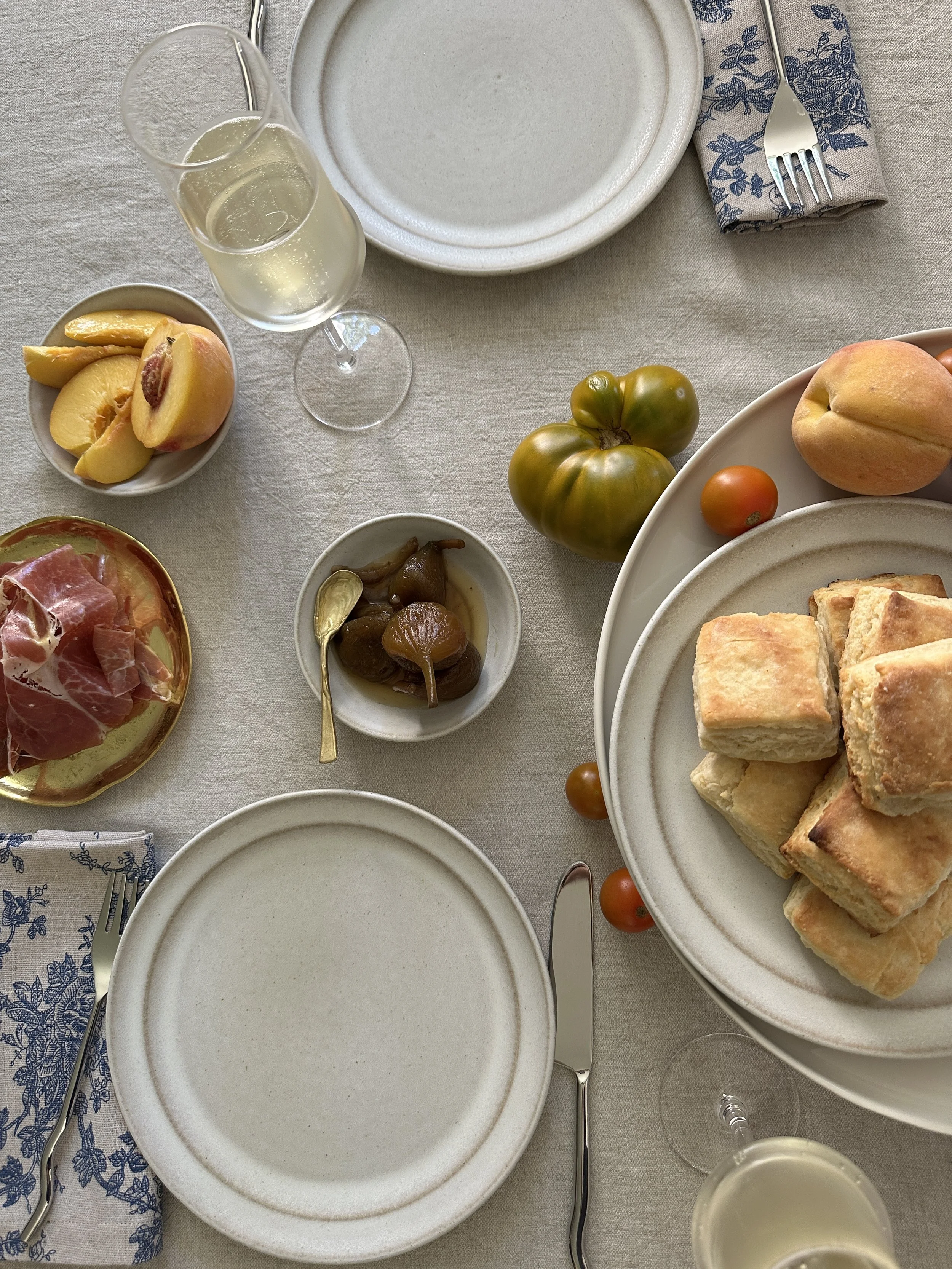
I live in Portland because I love it here, and because the lifestyle is great and it's a great place to raise kids. The product is made in Portugal, and the reason for that is that I have Portuguese heritage and citizenship, and I really want to reconnect to that, and the fact that Portugal has world-class ceramic manufacturing. I always say for them it's not just an industry; it's really part of their cultural patrimony. Think about all the tile work and all the things like ceramics are really ingrained in their culture, and producing there, I know the quality is excellent. But it also gives me this reason to go there and contribute to this country in some way and get to experience this country more and reconnect to my heritage, so it is really personal in that way.
Standard Affair launched last year in May, so it's only about a year and a half old. It's still very new, and it took me almost two and a half years before that to develop it—to come up with the name and the designs and to source manufacturing and all of that. Prior to that, I had a shop that was my first attempt at bringing the good stuff to people, and I closed my shop so that I could pivot and refocus on this, which I'm excited about because the shop was curating found objects, right? Other makers or other things in the world. And what's great about this brand right now, I make dinnerware and table linens. I have so many ideas and so many ways I want to grow this brand. I want to make everything for the home. It's a great creative space for me to work in, to bring my ideas to life.
I drew my dinner plate at least 40 times because moving the curve over one millimeter to me makes a big difference. I think that those small details are things that people don't immediately consciously recognize, but I think they subconsciously really perceive when they're using something. Standard Affair is also very sustainably produced. I don't want to sacrifice any of the function or aesthetic for that sustainability, and I don't feel that I have to: The factory has created this really groundbreaking technology where they can basically grind up all of the ceramic waste from the production process and put it back into the clay body—even small-scale potters in their home studios can't do that. It makes the clay body not circular—they do have to introduce some new material—but it's around 90% recycled. The factory is powered by solar panels, aside from the kilns, which have to be gas because they just take so much power. The strides that the factory has made towards sustainability are really impressive and beyond just regular Euro regulations. They're really investing in that. I love that I can make a really beautiful, really durable product, and also that it can be great for the environment.
I just launched some new pieces, just this past week. I now have a serving platter and a low serving bowl, and they both come in two colors. I introduced a new color to the line, which is a slate color. It's a dark charcoal gray. I'm excited to take them home, and I'm excited for other people to have them in their homes. And it's right before the holidays, so I can see so much holiday hosting happening on them. I'm excited about all the future potential ideas that I can develop and introduce, but having something new is always fun to share.
The thing that makes being a small business really difficult is also the thing that makes my brand really unique and really strong and really valuable. I think we need more independent designers. I think that the marketplace as a whole has really moved toward conglomeration—it's all big money and execs making creative decisions, and I think that we're—sort of on a large scale—moving away from companies that are actually driven by a creative person's vision for the world and their passion. The Ralph Laurens and the Calvin Kleins of the world—there's not that today, and I think it's harder for something like that to exist today.
One of the big challenges for me is it's a very noisy marketplace out there, right? We have the internet, and everybody's being advertised to all the time, and all these big companies have tons of money, and it's just me, and I don't have a ton of money, but I do have real vision, and I have something really authentic and soulful to say, and I really care. I really care about your home, and I really care about your table, and I think a lot of those big companies—they don't, right? The thing I think that gives my company value is also the thing that in general makes it a struggle because I'm so small and it's so difficult to compete in this marketplace. But I'm trying.