Clashing Eras

I have an aversion to themes. They don’t inspire me; occasionally, they even stress me. Yet in the issues that we’ve been putting out (see: issue 01; issue 02), themes do emerge—and that’s ok by me. The first Tomato Tomato was about setting the tone for the magazine and establishing what I mean by “food writing about culture.” That meant looking at recipe IP through advice-column satire and finding out what it’s like to create food on TV sets. In issue 02, I saw conviviality as a through-line: why to drink cask ale and kick up conversation, and do our best with menus even when we don’t know the language.
In issue 03, Tomato Tomato examines time, loosely defined and often dreamily experienced: the clashes between past and present, the ways in which people try to give shape to nostalgia and cultivate new roots, and how cuisine and language survive the mindlessness of overtourism and the destruction of colonialism.
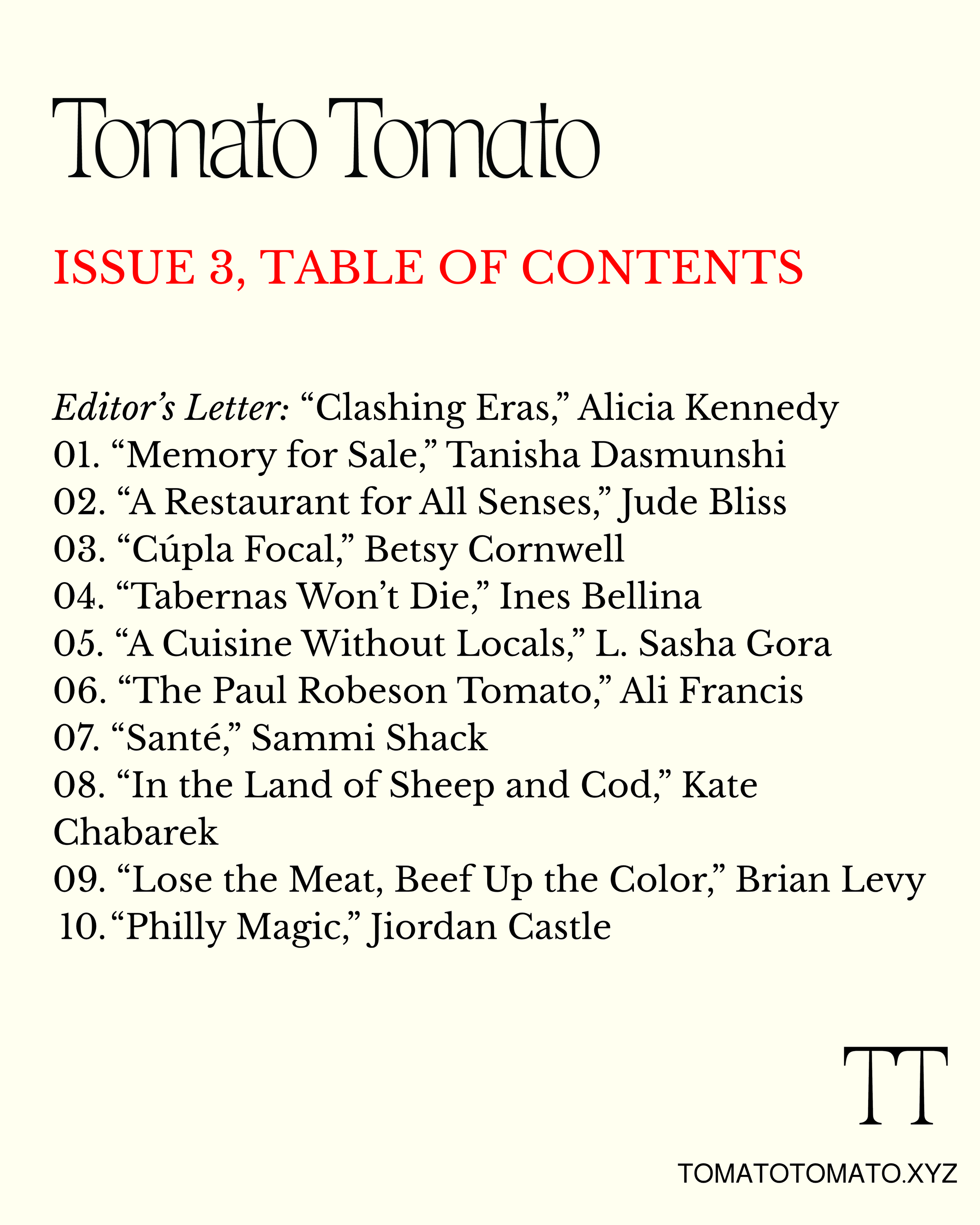
Tanisha Dasmunshi travels to India for a wedding and eats her way through her family’s story; Betsy Cornwell tells us how to read a menu in Irish; Ines Bellina takes us to Lima’s tabernas; L. Sasha Gora considers the food of a Venice without locals; Jiordan Castle makes a home in her new city of Philadelphia through becoming a regular at her ice cream shop; Jude Bliss asks what it would take to make a neurodivergent-friendly restaurant; Brian Levy eats tlayuda with a chef whose construction career was derailed by the 2008 recession; Kate Chabarek examines a vegetarian cookbook’s legacy in meaty Basque country; Sammi Shack explains the menu in Alsace; and Ali Francis gives us a peek into her new book, The Curious Lives of Vegetables.
I hope you’ll spend some time with these pieces that I’ve so enjoyed working on with the writers. To keep Tomato Tomato going and freely available, become a paid subscriber to From the Desk of Alicia Kennedy or make a one-time show of support.
Find all books mentioned or written by our writers in the Tomato Tomato Bookshop; any purchases earn us a small commission.
Thank you to contributing editors Devin Kate Pope and Simi Sonubi for their invaluable help on shaping this edition.