The Paul Robeson Tomato
TOMATO FAMILY: Solanaceae (Nightshade)
BOTANICAL NAME: Solanum lycopersicum
ORIGINS: Russia
Deep red with dark shoulders and stripes that drip down its sides like watercolor paint, the juicy Paul Robeson Tomato is a showstopper. But why was a Russian-bred tomato named after an African American activist in the first place?
Tomatoes began as small, tart berries, their scraggly vines sprawling across the rocky valleys and mountains of South America. By the time of the Olmecs and later the Aztecs, they’d been domesticated and were known by their Nahuatl names: xitomatl or tomatl. When Spanish conquistadors arrived in the early 1500s, they eyed tomato-laden enchiladas, stews, and early salsas with suspicion. Yet European and Mesoamerican flavors soon remixed, setting the stage for the berry’s voyage across the Atlantic.
A half-century later, seeds carried by travelers or tucked into cargo arrived in Spain, where they sprouted easily in Mediterranean soil but struggled for cultural acceptance. The fruit was botanically lumped in with eggplants and deadly nightshades—symbols of poison and witchcraft. (Not entirely baseless: tomatoes belong to the same family as belladonna, a plant infamous for its toxic alkaloids.) It would take hundreds of years for the tomato to shed its stigma and start appearing in humble peasant dishes.
In the mid-1800s, Russians began welcoming tomatoes at the table, too. And by the early 20th century, the Soviet Union had developed an appetite for more than new crops. “It was going through incredibly rapid industrialization and the collectivization of agriculture, but there weren’t enough skilled workers,” says Kimberly St. Julian-Varnon, a historian and PhD candidate at the University of Pennsylvania who studies the Soviet Union and East Germany. “So the Soviet Union actively recruited both Black and white workers from the United States.”
For African Americans in particular, that Soviet pitch carried special weight. During the 1920s and ’30s, the USSR positioned itself as a bastion of equality. At the same time, Black workers in a Depression-battered U.S. faced worsening racism and economic hardship. “The Soviet Union was the first country to say, ‘There is no segregation here, there is no Jim Crow here,’” says St. Julian-Varnon. “You could go to work; there was no racial terrorism. Most of those Black workers weren’t communists, but the opportunities beat anything the United States could offer.”
Though never a permanent resident, Paul Robeson was among those drawn by this then-radical promise. Born in 1898 to a once-enslaved father and a Quaker mother, he abandoned his law career after a white secretary refused to take his dictation, turning instead to acting and music. Robeson’s fame rose alongside his activism: championing labor rights, denouncing racism and fascism, and aligning with global communist movements. In the Soviet Union, he tasted freedom. “Here I am not a Negro but a human being for the first time in my life,” he said on his first visit to Moscow in 1934.
The man could also really read a room. Part of what made Robeson so magnetic was the powerful parallels he drew, connecting the long shadow of American slavery to Russia’s own history of serfdom, says St. Julian-Varnon. “He also regularly performed classic Russian peasant songs and religious songs... and it made people feel like: ‘He really understands us.’”
Robeson’s embrace by the Soviet Union wasn’t just symbolic—it put real pressure on the United States. Soviet newspapers published images of American lynchings and segregated schools, branding racism as a stain of capitalism. As St. Julian-Varnon explains, “By the time the Cold War starts, the United States sees racism as a foreign policy problem.” America needed the support of newly independent nations in Africa and Asia, she says, “but they couldn’t keep attracting students or allies if those people saw Black Americans beaten for wanting to go to school.”
A target of the House Un-American Activities Committee—established in 1938 to sniff out alleged communist ties—the U.S. State Department revoked Robeson’s passport in 1950. His frequent criticism of American racism abroad was considered bad for the national brand. Robeson later refused to denounce communism before Congress, declaring he would stay in the US and claim his place in the country his enslaved ancestors had built. Harassed and surveilled by the government, he spent his final years battling depression and died of stroke complications in 1976.
But Robeson’s influence lives on—in art, history, and, unexpectedly, this striking tomato. Its symbolism seems darkly overt, says St. Julian-Varnon: red, the iconic color of communism, long used to honor the blood of workers and revolutionaries; black, the color of Robeson’s own skin. “Was this them thinking of Robeson as the Black socialist?” she wonders. “The Soviet Union was never great at nuance.”
Who bred the Paul Robeson Tomato and how exactly it came by its iconic name is a mystery. But its full-circle journey back to American gardens is clearer. In the early 1990s, Marina Danilenko, who ran Moscow’s first private seed company alongside her mother, traveled to the United States to learn the seed trade. As thanks, she shared dozens of Russian tomato varieties with American growers, including the dark, dusky fruit simply labeled “Pol Robeson.” Jeff McCormack, founder of Southern Exposure Seed Exchange in Virginia, went on to introduce the tomato to the American market.
The fruit belongs to a group known as black tomatoes, coveted for their purplish-blue hues. In this case, those dark colors aren’t just skin-deep; they’re also a flavor indicator. While you can toss Paul Robeson Tomatoes into the usual dishes, all they really need is a drizzle of olive oil and a pinch of salt to bring out their distinctly sweet and smoky flavor. A simple preparation for a historically complex fruit.
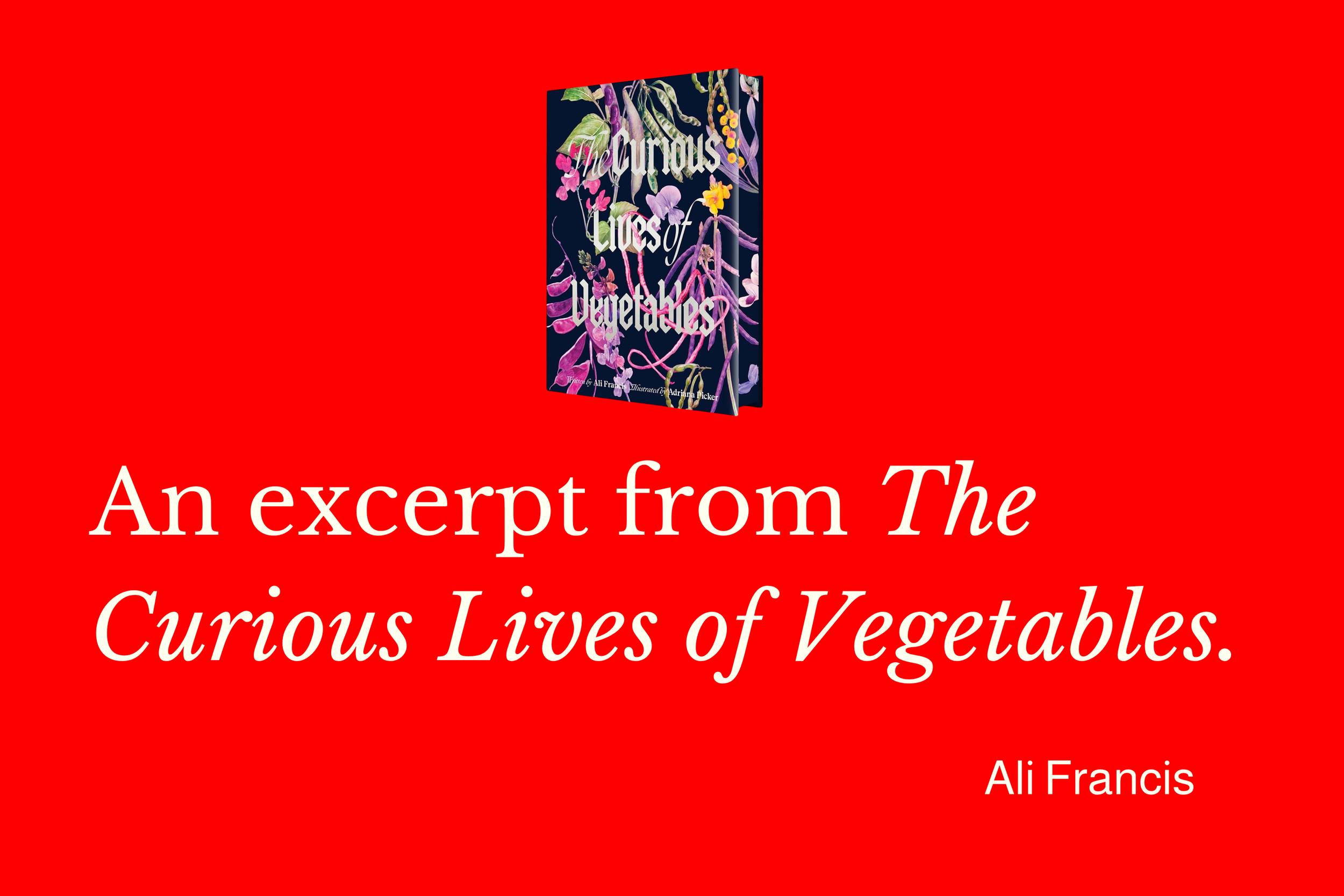
Excerpted with permission from The Curious Lives of Vegetables: An Artful Exploration of the Wonderful World of Edible Plants, Their History, and Their Crucial Role in Our Future by Ali Francis, published by Hardie Grant North America, September 2026, RRP $30.00 Hardcover.
ALI FRANCIS is an Australian journalist and former Bon Appétit reporter living in Salt Lake City, Utah. Her work has appeared in The Atlantic, The Cut, BBC, The Guardian, TASTE, and other publications. She’s the co-founder of Best Food Blog, a journalist-owned publication about eating, and writes Anyway!, a newsletter about how to be alive. The Curious Lives of Vegetables (September 15, 2026), a wild quest to uncover the stories we don’t usually hear about plants, is her first book.